
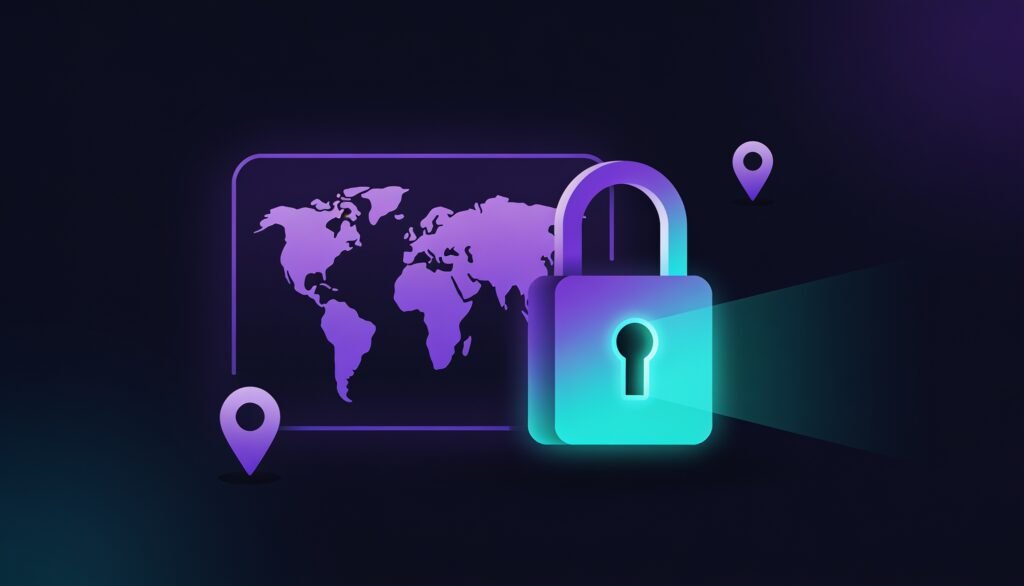
What is geo-blocking, exactly? It’s one of those things that trips people up because it’s way more common than most people assume — and it’s not just about Netflix.
“Geo-blocking” is the catch-all term for any site or app that limits what you can see based on where you are. It shows up in far more places than streaming.
What geo-blocking actually is
Geo-blocking works by checking your IP address, which gives away roughly where you are, and then showing, hiding, or changing content based on that location. That’s why a shopping site might list different prices depending on the country, a news outlet might block an article for readers outside its home region, or a streaming app hands you a completely different lineup of shows depending on where you’re logging in from.
Why companies do it
The reasons shift depending on the industry. Streaming and media companies do it because of country-specific licensing deals. Retailers do it to manage regional pricing and shipping. Some services block entire countries outright for legal or regulatory reasons. It’s rarely random — there’s almost always a business or legal reason sitting behind a given restriction, even if it’s annoying for the person running into it.
How a VPN changes what a site sees
Since geo-blocking relies on your IP address to estimate your location, connecting through a VPN server in a different country changes what the website detects. The site ends up reading the VPN server’s location instead of yours. That’s the same underlying mechanism whether you’re checking prices in another region, reaching a site that’s restricted where you live, or just getting a different version of a service than usual.
Why it doesn’t always work
Geo-blocking and VPN detection is a constant back-and-forth. The bigger, better-resourced services keep lists of known VPN server IP addresses and block or challenge them — which is why some servers work fine for a while, then suddenly stop, and switching to a different server is usually what fixes it. Smaller or less aggressive services often don’t bother detecting VPNs at all.
A note on terms of service
Using a VPN isn’t illegal in most countries. Separately, many websites and apps have terms of service that describe expected use, and location-based access is sometimes addressed in those terms. Policies vary a lot by service, so if this matters to you, it’s worth checking the terms for anything you use regularly. This isn’t legal advice — for anything specific to your situation, a legal professional is the right person to ask.
FAQ
Is geo-blocking the same everywhere in the world?
No — what’s blocked, and how strictly, varies enormously by service, industry, and region. There’s no single universal rule.
Can a website tell I’m using a VPN even if it can’t stop me?
Often, yes. Plenty of sites can detect that traffic is coming from a known VPN server IP address even if they don’t block it outright — sometimes they just run extra checks instead of a hard block.
Does clearing my browser cookies help with geo-blocking?
Not really. Geo-blocking is based mainly on IP address, not cookies, so clearing cookies alone won’t change what location a site thinks you’re in.